 Rishi Chemtrade Manufacturer and Supplier Rishi Chemtrade Manufacturer and Supplier Rishi Chemtrade Manufacturer and Supplier Rishi Chemtrade Manufacturer and Supplier Rishi Chemtrade Manufacturer and Supplier
 Rishi Chemtrade is a trusted Soda Ash Light manufacturer and supplier in India, delivering premium-quality Sodium Carbonate (Na₂CO₃) to industries across the country. Our Soda Ash Light is manufactured and sourced to meet stringent quality standards, ensuring excellent purity, strong alkalinity, and consistent performance.
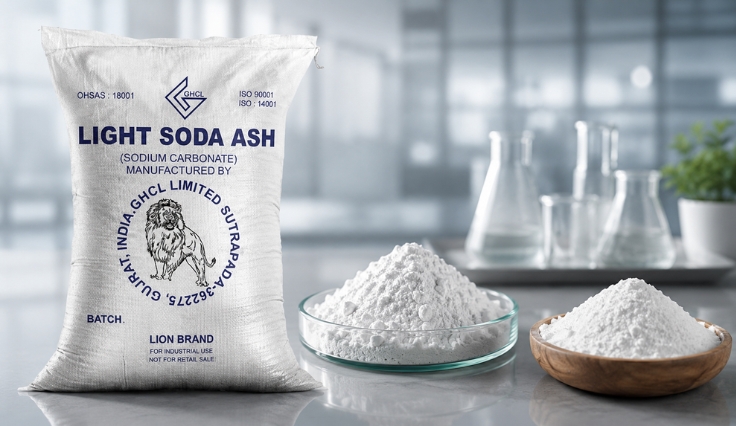
Widely used in glass manufacturing, detergents, water treatment, paper production, textile processing, chemical manufacturing, and environmental applications, our product offers superior efficiency and reliability. At Rishi Chemtrade, we are committed to providing high-quality industrial chemicals with competitive pricing, customized packaging, and prompt delivery. Backed by years of industry experience and a customer-focused approach, we ensure uninterrupted supply and dependable service for businesses seeking premium Soda Ash Light solutions.
| Parameter | Specification |
|---|---|
| Product Name | Soda Ash Light |
| Chemical Name | Sodium Carbonate |
| Chemical Formula | Na₂CO₃ |
| Appearance | White Crystalline Powder |
| Purity | 99.0% – 99.2% |
| Bulk Density | 0.55 – 0.78 g/cc |
| Chloride (NaCl) | ≤ 0.90% |
| Iron (Fe₂O₃) | ≤ 0.006% |
| Sulphates | ≤ 0.03% |
| Water Insoluble Matter | ≤ 0.10% |
| Melting Point | Approximately 851°C |
| Solubility | Highly Soluble in Water |
| Packaging | 25 kg HDPE Bags, Jumbo Bags, Bulk Packing |
Soda Ash Light is Sodium Carbonate used extensively in glass manufacturing, detergents, textiles, chemicals, and water treatment.
Glass factories, detergent manufacturers, textile processors, chemical plants, and water treatment facilities commonly use Soda Ash Light.
Rishi Chemtrade provides premium-quality Soda Ash Light with consistent specifications, competitive pricing, and dependable delivery.
It improves manufacturing efficiency, controls pH, softens water, and enhances chemical production processes.
Yes. Bulk industrial supply is available for manufacturers, exporters, and distributors.
Keep it in a dry, moisture-free warehouse using sealed packaging.
When handled and used according to industrial guidelines, Soda Ash Light is considered safe for approved industrial applications.
Our expertise delivers consistent quality, reliable chemical supply, innovative solutions, and exceptional customer support for industries.
 +91-6353302022
 WhatsApp
 Call
Call