Sodium Nitrate Manufacturer Gujarat
Sodium Nitrate (NaNO₃)
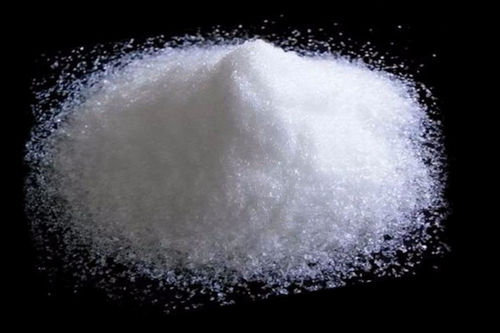
Sodium Nitrate, also known as Chile saltpeter, is a white crystalline or powdery compound with the formula NaNO₃. It is a highly soluble inorganic nitrate salt and acts as a source of nitrate ions (NO₃⁻). Due to its excellent solubility, oxidizing character, and nitrogen content, sodium nitrate finds use in fertilizers, industrial processes, heat transfer media, food preservation, and laboratory reagents.
Product Specifications (Typical / Industrial / Analytical Grade)
| Parameter | Typical Specification |
|---|---|
| Appearance | White crystalline or powder form |
| Purity / Assay | ≥ 99.0 % (or higher for analytical grade) |
| Melting point / Decomposition | ~ 306 °C (decomposes) |
| Solubility (water) | Very soluble (e.g. 874 g/L at 20 °C in some grades) |
| pH (5 % aqueous solution) | ~ 5.5 – 8.3 (slightly acidic to neutral) |
| Density (solid) | ~ 2.26 g/cm³ |
| Insoluble matter | ≤ 0.005 % |
| Chloride (Cl⁻) | ≤ 0.001 % |
| Iodate (IO₃⁻) and Nitrite (NO₂⁻) | Very low limits (e.g. ≤ 0.0005 % IO₃⁻, ≤ 0.0005 % NO₂⁻) |
| Heavy metals (as Pb) | Very low ppm levels (e.g. ≤ 0.0005 %) |
Available Grades
- Industrial Grade
- Agricultural Grade
- Analytical / Reagent Grade (high purity)
- Food Grade (for certain permitted preservative uses)
Key Features & Properties
- High Solubility — Dissolves readily in water, enabling fast preparation of nitrate solutions.
- Strong Oxidizing Character — Nitrate ion acts as an oxidizer, useful in some chemical processes.
- Stable Salt — Remains stable under normal storage conditions, though it is hygroscopic.
- Non‑acidifying in Soil — Supplies nitrate nitrogen without substantially acidifying the medium.
- High Nitrogen Content — Provides nitrogen in a form immediately available to plants.
- Thermal / Heat Storage Potential — Useful in high-temperature thermal storage systems.
Benefits & Advantages
- Fast Nutrient Availability — As nitrate nitrogen, it is immediately uptakeable by plants.
- Neutral Soil Impact — Unlike ammonium-based fertilizers, it does not significantly acidify soil.
- Dual Use (Nutrient + Oxidizer) — Useful in select chemical syntheses or oxidizing reactions.
- Thermal Energy Storage — Used in molten salt mixtures for concentrated solar power or heat storage systems.
- Preservative / Food Use — Serves as a preservative and color stabilizer in cured meats (E number E251), subject to regulations.
- Laboratory / Analytical Use — High purity grades serve in reagent applications and calibration standards.
Applications & Use Cases
Agriculture / Fertilizers
- Used as a nitrogen fertilizer, especially in soilless systems or in arid zones.
- Blended with other nutrients to formulate balanced fertilizer mixes.
Industrial / Chemical Processes
- As an oxidizer in chemical reactions or synthesis processes.
- In metal heat treatment or surface processing where nitrate salts are used in baths.
Thermal / Energy Storage
- Blended in molten salt mixtures for solar thermal storage and CSP plants.
- Utilized in salt mixtures undergoing phase transitions to store and release heat.
Food / Preservative
- Used in cured meats to prevent microbial growth and stabilize color (under regulatory control).
- Requires careful dosage due to health concerns and food regulations.
Laboratory / Analytical
- Used as a standard reagent or calibrant in analytical chemistry.
- Employed in research, chemical analysis, and calibrations.
Summary
Sodium Nitrate (NaNO₃) is a versatile and important chemical with functions spanning agriculture, industry, energy, and analytical science. With its high solubility, strong oxidizing potential, and nitrate nitrogen content, it offers fast nutrient delivery for plants, supports thermal storage systems, and functions in chemical applications where oxidation is needed. Its stability, purity, and relative agronomic neutrality make it a reliable choice across many sectors.